
Introduction
India is not a destination one simply arrives in; it is a place one steps into. It introduces itself through sound, movement, and human presence, encouraging visitors to observe before judging and to feel before fully understanding.
When travellers land in Mumbai for WordCamp Asia 2026, the first sensations they encounter are the warmth of the air and the city’s constant hum. For many, this intensity can feel overwhelming. Yet, from an Indian perspective, this is Mumbai in its most honest form, a city that never truly pauses, only shifts its pace.
Mumbai is often described as a “Maximum City,” lived at full volume. This is not a metaphor but a daily reality. Unlike cities where life unfolds behind closed doors, Mumbai exists in the open. Barbers offer haircuts on footpaths, neighbours engage in animated conversations over chai, and modern glass office towers stand alongside homes that have witnessed more than a century of change. Tradition and ambition exist side by side, constantly interacting.
The crowds and noise are undeniable, but they create something essential. In Mumbai, solitude is rare. There is a shared rhythm of people moving, helping, negotiating, and working together. This collective motion is what gives the city its unmistakable energy.
The Unspoken Language of Respect
In India, respect is often practiced rather than spoken. Across regions, language subtly communicates courtesy. In northern India, the respectful suffix “ji” is commonly used. In Maharashtra, particularly in Mumbai, polite forms such as formal titles or the Marathi “Aaho” are frequently heard, especially when addressing elders. In southern India, similar respect is conveyed through linguistic forms like “-garu,” “-avaru,” or “-nga,” each differing in sound but united in intent.
Addressing strangers as Anna (elder brother) or Akka (elder sister) is also common. This small habit transforms a city of millions into an extended community. Visitors are not expected to master these nuances; a polite tone, a gentle greeting, and genuine intent are universally understood.
The Soul of the Greeting: Namaste
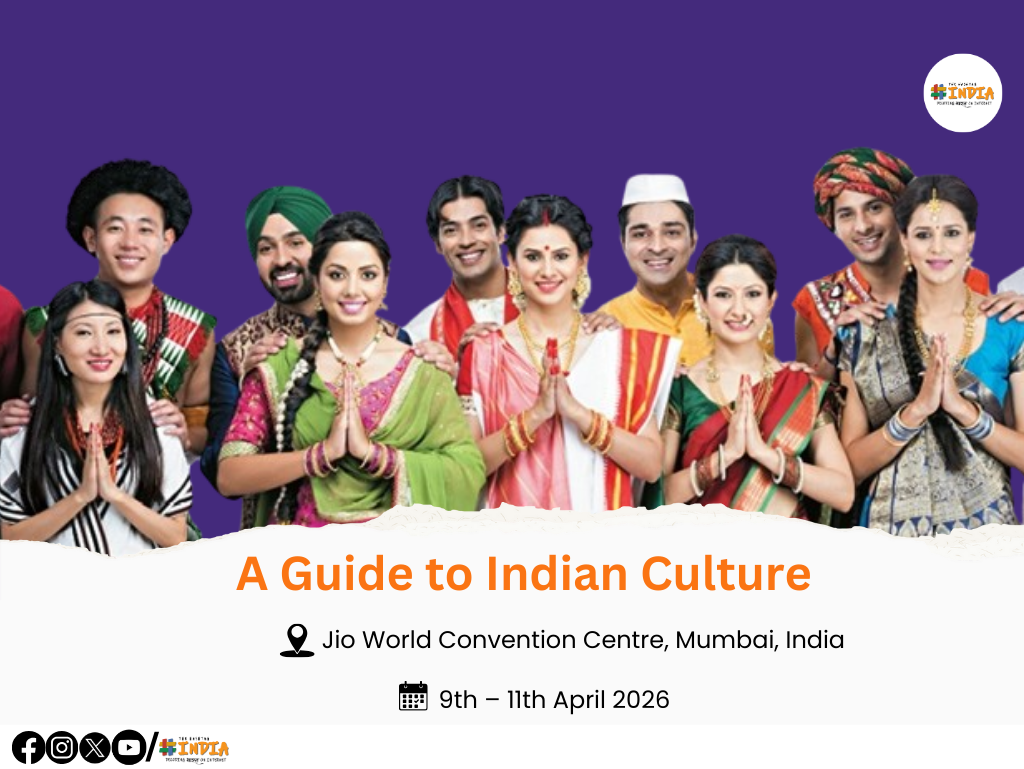
Greetings in India often carry meaning beyond words. Namaste or Namaskar, offered with palms pressed together, is a gesture of mutual acknowledgement and respect.
In contemporary urban India, particularly in Mumbai, a simple “Hello” or “Hi” is equally acceptable. Tradition and modernity do not compete here; they coexist, adapting naturally to context and setting.
Hospitality and the Philosophy of the Extra Plate
Indian hospitality is shaped by the principle Atithi Devo Bhava, the guest is regarded as divine. This is not a slogan but a lived practice. Visitors will often notice generous food portions, frequent offers of assistance, and a sincere concern for comfort and well-being.
Meals are rarely rushed. They are meant to be shared. Traditionally, eating with the right hand is seen as a way to stay connected to food, though participation is never enforced. What matters most is the act of sitting together, whether over a plate of poha, a dosa, or a simple home-cooked meal.
Beyond the Landmarks: Everyday Cultural Rhythms
Early mornings in Mumbai are quieter than many expect. Before traffic takes over, the city carries softer sounds, temple bells or the call to prayer from nearby mosques. These are not ceremonial moments but part of everyday life.
Chai plays a central role in this rhythm. More than a beverage, it is a pause. In Mumbai, cutting chai, a half glass of strong, ginger-spiced tea, becomes a space for conversation and exchange. Across India, the drink changes form: masala chai in the north, filter coffee in the south. The purpose remains the same, to slow down briefly and connect.
Markets reflect this cadence as well. The Dadar flower market before sunrise or the garland lanes of Matunga are not tourist attractions for locals; they are working spaces built on routine, trust, and long-standing relationships. Here, the city reveals its character quietly.
A Few Practical Realities
From an Indian perspective, these are not rules but everyday norms:
- Shoes are often removed in homes, temples, and sometimes shops.
- Personal space is fluid, shaped more by population than intent.
- Modest clothing, particularly in older neighbourhoods and spiritual spaces, is appreciated.
These small adjustments signal cultural awareness, which is always respected.
Craft, Tradition, and Handmade Heritage
Despite its global reputation for technology and startups, India continues to value craftsmanship. Mumbai serves as a bridge between rural artisans and urban markets. Hand-spun khadi, block-printed textiles, and markets rich in colour and texture remain an integral part of the city’s identity.
Daily art forms such as rangoli or kolam are drawn fresh each morning, meant to fade by evening. Tea served in clay kulhads returns to the earth once broken. These practices reflect a quiet philosophy, beauty does not need permanence to be meaningful.
Our Relationship with Time
There is a popular joke about “Indian Stretchable Time,” and at times it holds true. However, context matters. In professional environments, particularly at events like WordCamp Asia, punctuality is taken seriously. Mumbai’s local trains, in fact, operate with remarkable precision. When structure is required, the city delivers.
Final Thoughts
India and the WordPress community share a fundamental similarity: both are built by people, not just systems. They grow through collaboration, conversation, and contribution.
For those attending WordCamp Asia 2026 in Mumbai, the experience will extend beyond sessions and schedules. It will offer a glimpse into a country that moves quickly yet knows when to pause, debates openly while valuing respect, and always makes room for another story.
That is India, as it is lived, not just observed.
Stay Connected with The Hashtag India!
Love what you just read? Just Stay curious, keep exploring, and let every story inspire your day, your passions, and your journey!
Follow us for more amazing content: