
Introduction
Colaba is where Mumbai introduces itself, confident, historic, chaotic, and endlessly charming. A walk through Colaba isn’t just sightseeing; it’s a slow immersion into stories shaped by the sea, colonial legacies, cafés older than independence, and lanes that quietly guard forgotten corners of the city.
From the iconic Gateway of India to tucked-away art spaces and Irani cafés, Colaba rewards those who explore on foot. Every turn offers something different, a grand building, a street performer, a sudden sea view, or a café filled with conversations from another era.
Starting at the Gateway of India
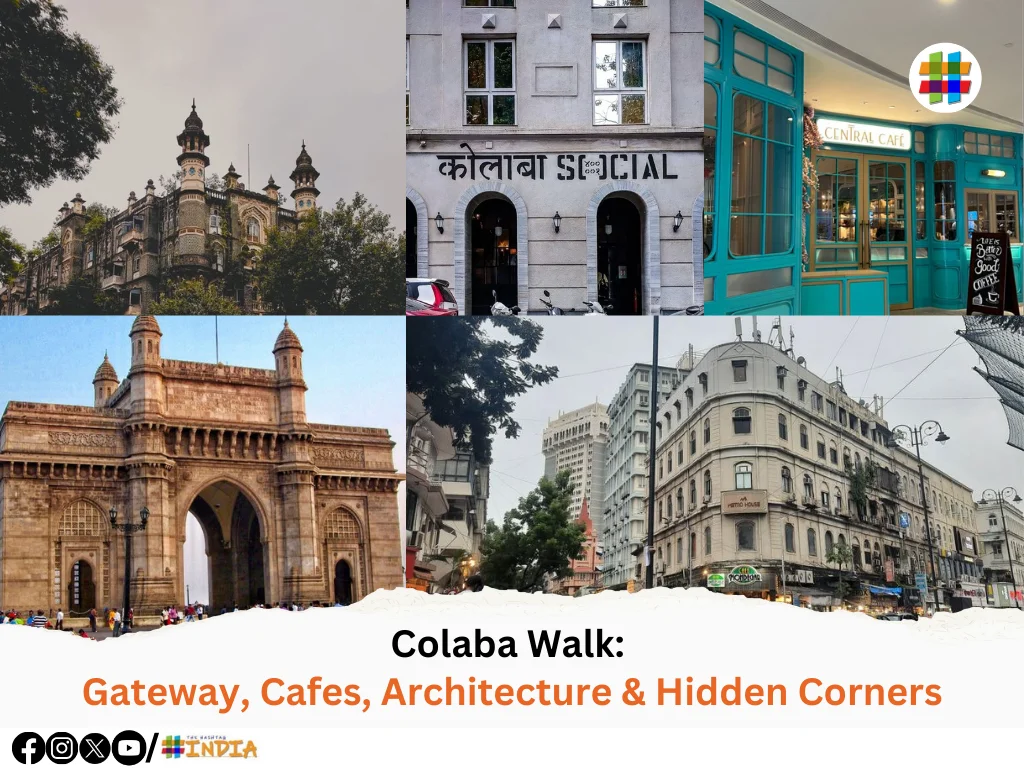
The Gateway of India is more than a monument, it’s Mumbai’s ceremonial front door. Overlooking the Arabian Sea, this basalt arch has witnessed colonial arrivals, farewells, protests, celebrations, and everyday life unfolding around it.
Mornings here feel calm and reflective, while evenings bring photographers, tourists, and locals soaking in the sea breeze. Ferries move quietly toward Elephanta, and street vendors sell everything from balloons to chai.
Walk note:
- Early mornings offer softer light and fewer crowds
- Sunset brings energy but also heavy footfall
- Pause and observe, the stories are often around you
Cafés That Define Colaba’s Soul
Colaba’s cafés are living archives. They’ve hosted writers, travelers, artists, soldiers, and locals for decades. Walking into them feels like stepping into another timeline.
Leopold Café still buzzes with conversations and clinking glasses, while Café Mondegar blends pop art, jukebox music, and old-school charm. Hidden inside heritage buildings are smaller cafés where the pace slows and time feels suspended.
What makes Colaba cafés special:
- Conversations matter more than screens
- Menus blend comfort food with nostalgia
- Many cafés double as cultural landmarks
Architecture That Tells Quiet Stories
Colaba’s architecture reveals layers of Mumbai’s past. Gothic facades sit beside Indo-Saracenic designs, while worn balconies overlook busy streets. Some buildings are impeccably restored; others carry graceful decay.
A walk down streets like Ropewalk Lane or around the Regal Cinema area shows structures that once housed traders, naval officers, and artists. Look up, balconies, windows, and old signage reveal details most people miss.
Slow down and notice:
- Hand-carved columns and railings
- Old nameplates and vintage signage
- Contrasts between restored and crumbling facades
Hidden Corners Most People Walk Past
Beyond the main roads lie Colaba’s quieter secrets. Narrow lanes open into art studios, small galleries, and residential pockets where life moves at a gentler pace.
There are courtyards hidden behind shops, staircases leading to rooftop views, and bookstores that feel like personal collections rather than retail spaces. These corners don’t demand attention—they reward curiosity.
You might stumble upon:
- Independent art spaces
- Old bookshops and record stores
- Residential lanes with colonial-era homes
Markets, Street Life & Everyday Mumbai
Colaba Causeway stitches the walk together with energy and color. Street vendors sell jewelry, souvenirs, clothing, and curios, while cafés spill onto pavements. Bargaining is part of the experience, but so is watching daily life unfold.
Between shops, you’ll notice locals heading to work, tourists planning their day, and regulars greeting shopkeepers they’ve known for years.
Local tips:
- Carry cash for smaller vendors
- Bargain politely, it’s expected
- Keep your belongings secure in crowds
When to Do the Colaba Walk
Colaba changes character throughout the day. Mornings feel reflective and calm, afternoons are busy and bright, and evenings carry a soft golden glow before nightlife takes over.
Best time for a walk:
- Morning: Photography, calm cafés, cooler weather
- Late afternoon: Architecture and street scenes
- Evening: Café hopping and seaside views
Final Thoughts
Colaba isn’t meant to be rushed. It’s a place where stories live between landmarks, inside cafés, along balconies, and in conversations overheard at street corners. Walking allows you to absorb the rhythm, notice the details, and connect with Mumbai beyond guidebook highlights.
If you want to understand the city’s past and present in one stretch, start at the Gateway and let your feet guide you. Colaba doesn’t just show you Mumbai, it lets you feel it.
Explore Mumbai beyond the lens and uncover the stories shaping its culture, food, and everyday life, experience the city like a local.
- The Ultimate Mumbai Travel Guide (Where to Eat, Stay & Explore)
- Top 20 Places to Visit in Mumbai for First-Time Travellers
- Bandra Guide: Culture, Cafes, Street Art & Markets
- South Bombay Cafe Guide: Ultimate SoBo
- Best Street Foods in Mumbai You Absolutely Must Try
- Hidden Places in Mumbai Only Locals Know
- Best Sunset & Seafront Spots in Mumbai
- Most Instagrammable Places in Mumbai
- Fort Area Walk: Architecture, History & British-Era Mumbai
- Where to Stay in Mumbai (Best Areas for Every Budget)
- Commuting in Mumbai: Local Trains, Metro, Taxis & Tips
- Mumbai Itinerary: 1-Day, 2-Day & 3-Day Plans
- Nightlife in Mumbai: Best Restaurants, Clubs & Late-Night Spots
- Iconic Mumbai Foods: Vada Pav, Misal, Pav Bhaji & Where to Find Them
- The Ultimate Bandra Food Trail
- Budget Eats in Mumbai Under ₹100, ₹200 & ₹300
- A Complete Guide to Marine Drive, Girgaum Chowpatty & Nariman Point
- Colaba Walk: Gateway, Cafes, Architecture & Hidden Corners
- Dadar & Shivaji Park: Local Life, Food & Culture
- Shopping in Mumbai: Colaba, Linking Road, Lokhandwala + More
- Weekend Trips from Mumbai (Beaches, Mountains & Nature Spots)
- Lonavala, Alibaug, Igatpuri & Matheran — Full Guide to Quick Escapes
Stay Connected with The Hashtag India!
Love what you just read? Just Stay curious, keep exploring, and let every story inspire your day, your passions, and your journey!
Follow us for more amazing content: