
Introduction
Mumbai is a city that races toward the future, yet quietly preserves its past in stone, arches, and forgotten lanes. Nowhere is this contrast more evident than in the Fort Area, a historic precinct that once formed the walled heart of British Bombay. Walking through Fort feels like stepping into a living museum, where colonial-era buildings, bustling streets, and cultural landmarks tell stories of power, trade, and transformation.
A Fort Area walk is not just about sightseeing; it’s about understanding how Mumbai evolved from a colonial port city into India’s financial capital. Every building here has a story etched into its walls.
The Origins of the Fort Area
The Fort Area gets its name from Fort George, a fortified settlement built by the British East India Company in the 18th century. The fort once protected the city from invasions, but as Bombay expanded, the walls were demolished in the 1860s to make way for new roads and grand civic buildings.
What remains today is a legacy of British-era planning, Indo-Gothic architecture, and Victorian design, making the Fort Area one of the most historically rich neighborhoods in Mumbai.
Architecture That Defines British-Era Mumbai
The Fort precinct is globally admired for its architectural brilliance, much of which is recognized as UNESCO World Heritage Sites.
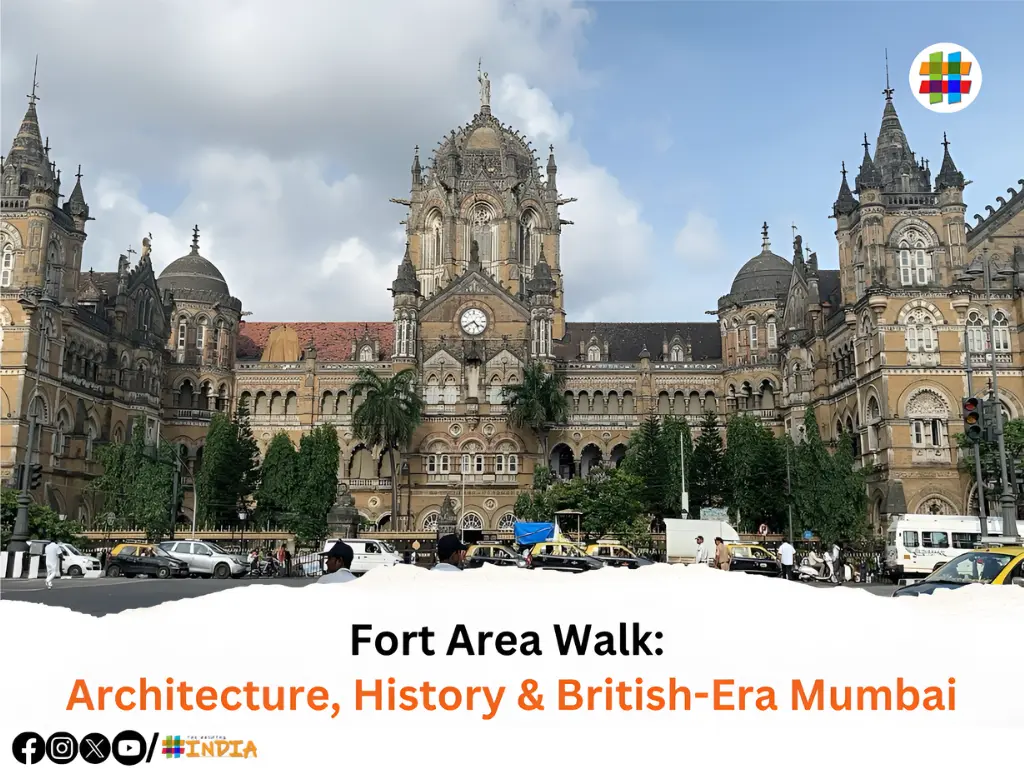
Chhatrapati Shivaji Maharaj Terminus (CSMT)
Formerly Victoria Terminus, CSMT is a masterpiece of Victorian Gothic Revival architecture blended with Indian elements. With its domes, stained glass, carvings, and turrets, it stands as a symbol of colonial ambition and Indian craftsmanship.
Bombay High Court
Built in the Neo-Gothic style, the Bombay High Court features towering spires and intricate stonework. It continues to function as one of India’s most important judicial institutions.
University of Mumbai
The University’s iconic Rajabai Clock Tower dominates the skyline. Inspired by London’s Big Ben, the structure reflects Victorian elegance combined with Indian materials and labor.
Asiatic Society Library
A striking Greek Revival structure, this library houses rare manuscripts and books, including ancient texts. Its grand staircase and tall columns make it a favorite spot for architecture lovers and photographers.
Walking Through History: Streets & Landmarks
A Fort Area walk reveals layers of Mumbai’s past beyond iconic buildings.
- Horniman Circle Gardens: A peaceful green space surrounded by heritage buildings, once a key center for political and cultural gatherings.
- Kala Ghoda: Mumbai’s art district, home to galleries, museums, and the famous Kala Ghoda Arts Festival.
- Flora Fountain: An elegant fountain symbolizing colonial-era urban design, marking the transition between Fort and South Mumbai.
Each street echoes stories of British officers, Indian freedom fighters, traders, and artists who shaped the city.
Culture, Cafés & Everyday Life
Despite its historic charm, the Fort Area is very much alive.
- Heritage Cafés: Iconic spots like Café Military, Yazdani Bakery, and Leopold Café preserve old-world charm while serving generations of Mumbaikars.
- Street Life: Lawyers rushing to court, office-goers grabbing quick snacks, book vendors near Flora Fountain—daily life unfolds amid colonial backdrops.
- Art & Literature: From the Jehangir Art Gallery to roadside bookstalls, Fort remains a cultural nerve center.
Best Time to Do a Fort Area Walk
- Early Morning: Ideal for photography and quiet exploration.
- Weekdays: Experience the area as a working district with vibrant energy.
- Winter Months (Oct–Feb): Pleasant weather makes walking comfortable.
Wear comfortable shoes, carry water, and keep time aside to pause, this walk rewards slow exploration.
Why the Fort Area Walk Matters
The Fort Area is more than architecture; it represents Mumbai’s colonial past, its freedom movement, and its cultural evolution. Walking these streets offers insight into how history, power, and people shaped the city’s identity.
From towering Gothic buildings to humble bookstalls and cafés, Fort captures the spirit of British-era Mumbai blended seamlessly with modern life.
Final Thoughts
A Fort Area walk is one of the most enriching ways to experience Mumbai. It’s a journey through time, where stone buildings narrate stories of empire, resistance, and resilience. Whether you’re a history enthusiast, architecture lover, photographer, or curious traveler, this walk reveals a side of Mumbai that goes beyond beaches and skylines.
To truly understand the city, slow down, walk through Fort, and let British-era Mumbai unfold one step at a time.
Explore Mumbai beyond the lens and uncover the stories shaping its culture, food, and everyday life, experience the city like a local.
- The Ultimate Mumbai Travel Guide (Where to Eat, Stay & Explore)
- Top 20 Places to Visit in Mumbai for First-Time Travellers
- Bandra Guide: Culture, Cafes, Street Art & Markets
- South Bombay Cafe Guide: Ultimate SoBo
- Best Street Foods in Mumbai You Absolutely Must Try
- Hidden Places in Mumbai Only Locals Know
- Best Sunset & Seafront Spots in Mumbai
- Most Instagrammable Places in Mumbai
- Fort Area Walk: Architecture, History & British-Era Mumbai
- Where to Stay in Mumbai (Best Areas for Every Budget)
- Commuting in Mumbai: Local Trains, Metro, Taxis & Tips
- Mumbai Itinerary: 1-Day, 2-Day & 3-Day Plans
- Nightlife in Mumbai: Best Restaurants, Clubs & Late-Night Spots
- Iconic Mumbai Foods: Vada Pav, Misal, Pav Bhaji & Where to Find Them
- The Ultimate Bandra Food Trail
- Budget Eats in Mumbai Under ₹100, ₹200 & ₹300
- A Complete Guide to Marine Drive, Girgaum Chowpatty & Nariman Point
- Colaba Walk: Gateway, Cafes, Architecture & Hidden Corners
- Dadar & Shivaji Park: Local Life, Food & Culture
- Shopping in Mumbai: Colaba, Linking Road, Lokhandwala + More
- Weekend Trips from Mumbai (Beaches, Mountains & Nature Spots)
- Lonavala, Alibaug, Igatpuri & Matheran — Full Guide to Quick Escapes
Stay Connected with The Hashtag India!
Love what you just read? Just Stay curious, keep exploring, and let every story inspire your day, your passions, and your journey!
Follow us for more amazing content: