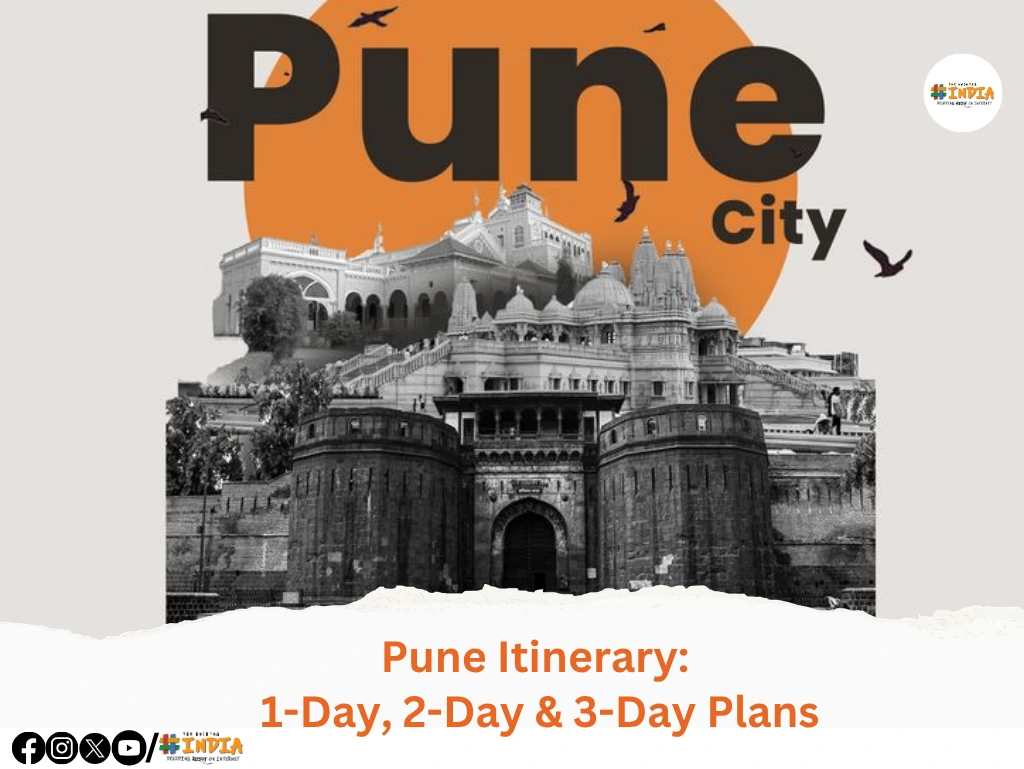

Pune is one of those cities where the experience changes completely depending on how you plan your day. A rushed list of attractions often leaves visitors feeling that they only saw traffic and crossed roads, while a well-structured itinerary helps the city unfold naturally, heritage in the morning, local food by afternoon, slower neighborhoods by evening, and relaxed cultural corners in between.
The reason planning matters in Pune is simple: some places are best seen early before crowds build, some roads become slower later in the day, and certain neighborhoods only truly come alive after sunset. The city also carries very different identities, old Pune with forts, temples, and peths; central Pune with student energy and food culture; and modern Pune with cafés, premium neighborhoods, and evening social life.
A proper itinerary should therefore not only tell you where to go, but also when to go and how to group nearby places together.
1. 1-Day Pune Itinerary: Best for a Quick First Visit
If you have only one day in Pune, the smartest plan is to focus on one heritage stretch, one food district, and one modern neighborhood instead of trying to cover everything.
Morning (8:00 AM – 11:30 AM): Start with Pune’s Historic Heart
Begin your day at Shaniwar Wada, because mornings here feel quieter and allow you to appreciate the fort’s scale before the area becomes busy. The massive entrance gate, thick stone walls, and open interior immediately connect you to Pune’s Maratha history.
Spend time slowly walking inside rather than treating it as a quick photo stop. The remains may look simple at first, but the space becomes more meaningful when you imagine it as the former political center of Pune.
After Shaniwar Wada, walk toward Kasba Ganpati Temple, one of Pune’s most culturally respected temples. The surrounding lanes begin introducing old Pune’s rhythm, shops opening, temple bells, local movement, and narrow roads carrying daily life.
Continue into Tulshibaug, where heritage suddenly becomes market energy. Even if you are not shopping, this area helps you understand old Pune because the market remains deeply tied to the city’s traditional commercial culture.
Morning route:
- Shaniwar Wada
- Kasba Ganpati
- Tulshibaug
Local tip:
Start early because old city roads become crowded quickly.
Lunch (12:00 PM – 2:00 PM): Experience Central Pune
Move toward Deccan Gymkhana for lunch. This area gives a completely different feel—broader roads, student energy, older institutions, and a strong food identity.
Lunch here works well because Deccan connects naturally with both old and modern Pune.
After lunch, take a short slow walk nearby instead of immediately moving again.
Afternoon (2:30 PM – 5:00 PM): Explore Pune’s Cultural Layer
Head toward Aga Khan Palace. The atmosphere here changes completely from crowded city movement to open calm heritage.
Unlike fort spaces, Aga Khan Palace feels quieter and reflective, making it ideal for the afternoon when you want slower pacing.
Why afternoon works here:
- Open surroundings
- Less rushed movement
- Historical depth without market density
Evening (5:30 PM – 9:00 PM): End in Koregaon Park
Spend your evening in Koregaon Park because this is where Pune feels relaxed, polished, and socially active.
The roads are greener, the pace slows visually, and cafés become part of the city experience rather than just food stops.
Best evening flow:
- Slow walk
- Café break
- Dinner nearby
A one-day Pune trip feels complete when the evening ends somewhere calm after a heritage-heavy morning.
2. 2-Day Pune Itinerary: Best for a Balanced Weekend Visit
If you have two days in Pune, the best approach is to divide the city into two distinct experiences, one day focused on heritage and old neighborhoods, and the second day built around viewpoints, quieter spaces, and modern Pune. This allows you to experience both the historical identity and the lifestyle side of the city without making the trip feel rushed.
Morning (8:00 AM – 11:30 AM): Walk Through Architectural Old Pune
Begin your second day at Vishrambaug Wada, one of the most important surviving heritage buildings in Pune. The carved wooden balconies, old façade, and traditional wada structure give you a deeper look into how elite residences in old Pune were designed during the Peshwa period.
Spend time observing the details rather than moving quickly, because much of its charm lies in the craftsmanship that is easy to miss in a rushed visit.
From here, continue toward Lal Mahal, which carries strong historical significance because of its connection to Shivaji Maharaj and early Pune history.
Although smaller than many visitors expect, the importance of this stop comes from what it represents in Pune’s memory rather than scale.
After Lal Mahal, walk through nearby heritage lanes slowly. This stretch often reveals smaller temples, old signboards, and hidden corners that many visitors miss when traveling only by vehicle.
Morning route:
- Vishrambaug Wada
- Lal Mahal
- Heritage lanes nearby
Local tip:
Morning is ideal because the heritage core feels easier to explore before traffic and commercial movement increase.
Lunch (12:00 PM – 2:00 PM): Experience Traditional Pune Market Roads
Head toward Laxmi Road for lunch and local city atmosphere. This stretch is one of Pune’s oldest commercial arteries and shows how trade still shapes daily movement in the old city.
Even if crowded, Laxmi Road offers an authentic urban experience because the road itself reflects Pune’s old commercial identity.
After lunch, spend some time walking rather than immediately leaving, because nearby lanes often reveal local shops and small architectural details that make this area memorable.
Why lunch works here:
- Central location
- Traditional city movement
- Strong local atmosphere
Afternoon (2:30 PM – 5:00 PM): Temple, Culture & Everyday Pune
Visit Dagadusheth Halwai Ganapati Temple, one of Pune’s most visited spiritual landmarks and a place where devotion and city movement exist side by side.
The temple remains active throughout the day, and the surrounding flower stalls, local vendors, and moving crowds make it feel connected to everyday Pune rather than isolated as a tourist stop.
Spend a little time in the surrounding streets because this area reflects how faith remains woven into city life.
Why afternoon works here:
- Active temple atmosphere
- Easy connection with nearby lanes
- Strong cultural energy
Evening (5:30 PM – 9:00 PM): End with Pune’s Youthful Energy
Spend the evening at FC Road, where Pune feels younger, more energetic, and socially active.
By evening, the road becomes lively with students, bookstores, cafés, and street movement that feels completely different from the old city atmosphere of the morning.
Best evening flow:
- Slow walk
- Browse bookstores
- Café break
- Light dinner nearby
A second day in Pune feels complete when it ends in a neighborhood that reflects the city’s youthful side.
3. 3-Day Pune Itinerary: Best for a Fuller Pune Experience
If you have three days, the third day should move away from heritage-heavy exploration and allow you to see Pune’s quieter viewpoints, modern districts, and more relaxed urban rhythm.
The first two days help you understand the city’s history and local culture. The third day should help you understand how Pune breathes beyond its monuments.
Morning (7:30 AM – 11:00 AM): Begin with a City View
Start early at Parvati Hill, because mornings are the best time for the climb before the weather becomes warmer.
The steps are manageable, and the view from the top offers one of the clearest ways to understand Pune’s spread, old city clusters, newer developments, and distant hills all becoming visible together.
Spend time at the top instead of descending immediately, because the quiet morning atmosphere is part of the experience.
Morning route:
- Parvati Hill climb
- Temple area above
- Viewpoint pause
Local tip:
Carry water and start early for a more comfortable climb.
Lunch (12:00 PM – 2:00 PM): Experience New Pune
Move toward Baner for lunch, where Pune begins to feel noticeably newer and more urban.
The roads are wider, the surroundings more contemporary, and the pace different from central Pune.
Lunch here works well because it introduces the city’s newer residential and lifestyle side.
Why lunch works here:
- Modern city feel
- Newer urban atmosphere
- Slower compared to old city roads
Afternoon (2:30 PM – 5:30 PM): A Slower Nature Stop
Head toward Pashan Lake, where the city suddenly feels quieter.
After two days of built spaces and active roads, this stop helps slow the pace of the trip. The lake area works best when approached without hurry.
Spend time walking slowly rather than treating it as only a photo stop.
Why afternoon works here:
- Calm surroundings
- Open space
- Break from traffic-heavy movement
Evening (6:00 PM – 9:00 PM): End with Modern Pune’s Evening Side
Spend your final evening in Balewadi, where modern Pune feels active in a very different way from Koregaon Park.
This part of the city reflects newer Pune—cleaner roads, modern development, and a more current urban energy.
Best evening flow:
- Relaxed dinner
- Slow area exploration
- Observe newer Pune’s pace
A third day feels complete when the trip ends by seeing how different Pune can feel away from its older core.
Smart Itinerary Tips
- Start heritage areas early
- Keep afternoons lighter
- Avoid crossing the city repeatedly
- Use evenings for neighborhoods, not monuments
- Leave room for food and short breaks
Final Thoughts
A proper Pune itinerary works best when the city is explored without rushing, because Pune reveals its character gradually through changing neighborhoods, local rhythms, and distinct daily moods. Day 1 introduces its historic identity through major landmarks, Day 2 brings you closer to local cultural life through heritage streets and active neighborhoods, while Day 3 shows a quieter and more modern side of the city.
By the end of three days, Pune feels less like a list of attractions and more like a city whose history, everyday life, and modern growth slowly connect. That is what makes a multi-day visit more rewarding, each day adds a different layer to the experience.
Explore Pune beyond the postcards and uncover the stories shaping its culture, street food, traditions, and everyday rhythm. Experience the city like a local:
- The Ultimate Pune Travel Guide (Places, Food, Culture & Weekend Escapes)
- Best Street Food in Pune You Absolutely Must Try
- Iconic Pune Foods: Misal, Bhakarwadi, Mastani & More
- Top Cafes in Pune for Work, Creativity & Conversations
- Koregaon Park Food Trail: Cafes, Restaurants & Night Spots
- Budget Eats in Pune Under ₹100, ₹200 & ₹300
- Top Places to Visit in Pune for First-Time Travellers
- Hidden Places in Pune Only Locals Know
- Best Sunset & Viewpoints in Pune
- Most Instagrammable Places in Pune
- A Complete Guide to Shaniwar Wada & Old Pune
- Deccan Pune Guide: Culture, Food & Local Life
- Koregaon Park Guide: Cafes, Nightlife & Lifestyle
- Baner–Balewadi Area Guide: The New Pune Hotspot
- Old City Pune Walk: Peths, Temples & Heritage Streets
- Where to Stay in Pune (Best Areas for Every Budget)
- Getting Around Pune: Public Transport, Metro & Local Tips
Stay Connected with The Hashtag India!
Love what you just read? Just Stay curious, keep exploring, and let every story inspire your day, your passions, and your journey!
Follow us for more amazing content: