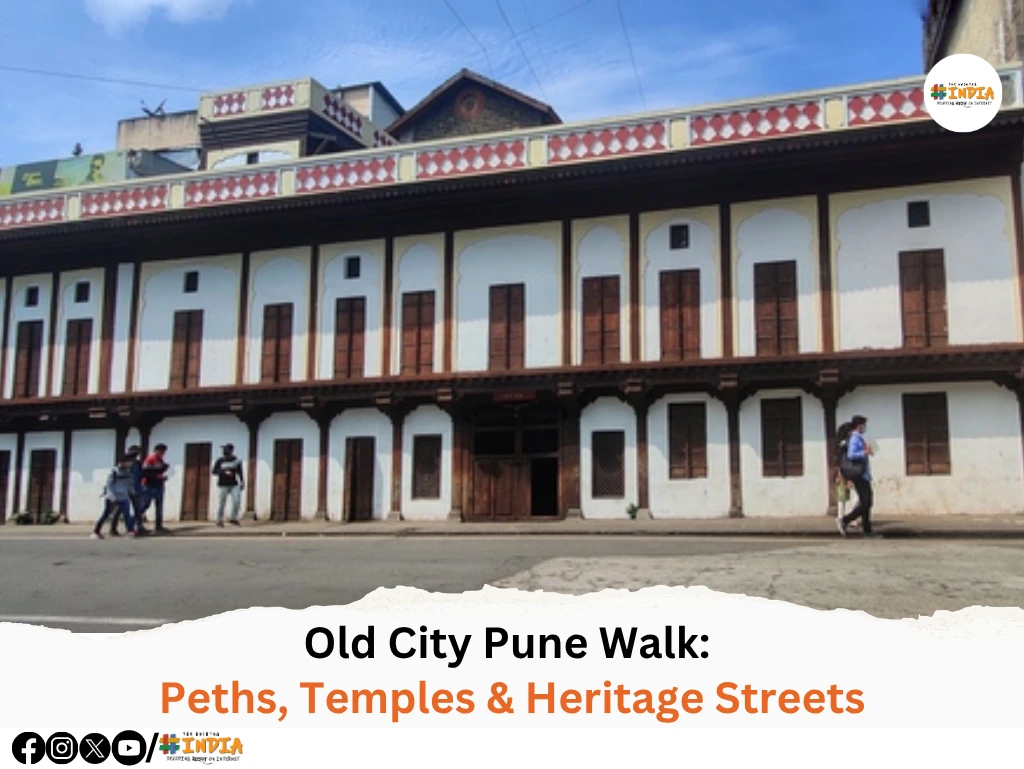

The oldest part of Pune is where the city still remembers itself most clearly. Long before Pune expanded into modern residential hubs and business districts, its identity was shaped through tightly connected peths, temple courtyards, wada architecture, local markets, and community-based streets where daily life moved around tradition. Even today, a walk through old Pune feels different from the rest of the city because history here is not locked inside monuments, it continues through everyday routines, shopfronts, prayer bells, handwritten signboards, and old homes that still stand quietly between modern changes.
For anyone visiting Pune for the first time, Old City Pune offers the strongest connection to the city’s roots. The lanes may appear crowded at first, but once you begin walking slowly, details begin to reveal themselves, arched wooden balconies, hidden shrines, narrow passages, old doors, local sweet shops, and conversations that seem unchanged by time.
A proper old city walk should not be limited to one monument. The richness of this part of Pune lies in moving from one layer of heritage to another.
Understanding Pune’s Historic Peth System
The word “peth” refers to historic neighborhood divisions that were established during different phases of Pune’s development, especially under Maratha rule. Many of these peths were designed around trade, residence, temples, and community life.
Even today, areas like Sadashiv Peth, Narayan Peth, Budhwar Peth, Raviwar Peth, and Shukrawar Peth each carry distinct local character.
What makes Pune’s peths special:
- Narrow interconnected roads
- Traditional neighborhood planning
- Old residential architecture
- Long-standing local businesses
- Cultural continuity through generations
Unlike planned modern neighborhoods, these areas evolved organically, which is why every lane feels layered and lived-in.
Begin at Shaniwar Wada
No old Pune walk feels complete without beginning at Shaniwar Wada, the historical heart of the city. Built in the eighteenth century, it served as the political center of the Peshwas and remains Pune’s strongest architectural reminder of Maratha-era power.
The giant Delhi Darwaza still creates an immediate impression, while the fort walls and inner foundations help visitors imagine the scale of the original palace.
Don’t miss here:
- Delhi Darwaza entrance
- Massive fort walls
- Palace remains
- Garden sections
- Historical layout inside the fort
Morning visits usually allow better observation because the space feels calmer before crowds gather.
Continue Toward Lal Mahal
A short distance from Shaniwar Wada, Lal Mahal carries strong historical significance because it is closely associated with Shivaji Maharaj and his early years in Pune.
Though reconstructed, the site remains important because of its symbolic connection to Pune’s political and cultural memory.
Why stop here:
- Historical link with Shivaji Maharaj
- Important Maratha-era reference point
- Strong cultural significance
This stop helps connect Pune’s larger Maratha narrative with the surrounding old city.
Visit Kasba Ganpati Temple
Kasba Ganpati is considered one of Pune’s most culturally respected temples and holds deep significance during major city celebrations.
The temple surroundings remain closely tied to neighborhood life, making it an essential part of any heritage walk.
What makes it important:
- One of Pune’s oldest major temples
- Strong local devotion
- Traditional surrounding lanes
The closer you observe the area, the more the local rhythm becomes visible.
Walk Through Tulshibaug
Tulshibaug brings energy into the heritage walk through market movement, traditional shopping, and layered architecture.
Though known today for shopping, the area also preserves old Pune’s built texture through temple structures, narrow passages, and older building fronts hidden behind commercial activity.
Don’t miss:
- Traditional market lanes
- Old temple architecture
- Street-side local activity
- Historic commercial atmosphere
This is one of the best places to observe how old commerce still shapes Pune.
Experience Devotion at Dagadusheth Halwai Ganapati Temple
This temple remains one of Pune’s most visited spiritual landmarks and adds a strong devotional layer to the old city walk.
The area around it stays active with flower stalls, local vendors, and constant movement that reflects Pune’s public religious culture.
Why include it:
- Major spiritual landmark
- Constant local energy
- Traditional street life around temple routes
The temple also connects easily to nearby heritage lanes.
Slow Down in Sadashiv Peth
Sadashiv Peth remains one of the most important old residential neighborhoods in Pune and offers a quieter heritage experience compared to market-heavy streets.
This is where older wooden houses, internal courtyards, and neighborhood identity become more visible.
Notice carefully:
- Wooden balconies
- Old residential facades
- Traditional neighborhood rhythm
- Narrow quiet lanes
This part of the walk often feels most authentic because it still functions primarily as lived neighborhood space.
Explore Vishrambaug Wada
Vishrambaug Wada is one of the most important heritage structures often missed by first-time visitors.
Its wooden façade, carved balconies, and historical design offer one of Pune’s clearest examples of wada architecture.
Don’t miss here:
- Detailed wooden craftsmanship
- Traditional façade
- Historic courtyard style
It is one of the strongest visual examples of old Pune architecture.
Walk Along Laxmi Road
Laxmi Road may seem commercial today, but it remains deeply tied to old Pune’s historic urban movement.
The road links multiple heritage zones and still reflects traditional city commerce.
What adds character:
- Historic shopping stretch
- Dense local movement
- Traditional businesses
- Old city continuity
Even if busy, this road helps connect many old Pune landmarks naturally.
Hidden Things Many Visitors Miss
1. Small temples in side lanes
Many side lanes contain small shrines that locals still visit daily.
2. Old handwritten signboards
Several businesses still preserve older sign styles that quietly reflect another era.
3. Traditional sweet shops
Long-standing local sweet stores remain part of old Pune’s identity.
4. Inner chowks and courtyards
Some lanes unexpectedly open into internal spaces that reveal older neighborhood design.
Best Time for an Old City Walk
- Early morning for clear observation
- Late afternoon for market atmosphere
- Avoid peak noon heat
Morning usually allows better appreciation of architectural details.
Quick Tips Before You Walk
- Wear comfortable footwear
- Keep your phone/camera ready for small details
- Respect temple rules
- Explore side lanes slowly
- Avoid rushing between landmarks
Final Thoughts
Old City Pune is not a place that reveals itself in one glance. Its value lies in details, heritage hidden inside daily life, old architecture surviving beside modern signage, and neighborhoods that still function with cultural memory intact. A proper walk through Pune’s peths should include monuments, temples, wada architecture, local markets, and quieter residential stretches because together they explain how the city originally grew. The deeper you walk, the more Pune feels layered, personal, and historically alive. For anyone who wants to understand the city beyond popular attractions, old Pune remains the most complete story.
Explore Pune beyond the postcards and uncover the stories shaping its culture, street food, traditions, and everyday rhythm. Experience the city like a local:
- The Ultimate Pune Travel Guide (Places, Food, Culture & Weekend Escapes)
- Best Street Food in Pune You Absolutely Must Try
- Iconic Pune Foods: Misal, Bhakarwadi, Mastani & More
- Top Cafes in Pune for Work, Creativity & Conversations
- Koregaon Park Food Trail: Cafes, Restaurants & Night Spots
- Budget Eats in Pune Under ₹100, ₹200 & ₹300
- Top Places to Visit in Pune for First-Time Travellers
- Hidden Places in Pune Only Locals Know
- Best Sunset & Viewpoints in Pune
- Most Instagrammable Places in Pune
- A Complete Guide to Shaniwar Wada & Old Pune
- Deccan Pune Guide: Culture, Food & Local Life
- Koregaon Park Guide: Cafes, Nightlife & Lifestyle
- Baner–Balewadi Area Guide: The New Pune Hotspot
Stay Connected with The Hashtag India!
Love what you just read? Just Stay curious, keep exploring, and let every story inspire your day, your passions, and your journey!
Follow us for more amazing content: